- TypeScript
- Used for structured front-end tools and app experiments, including prompt, budget, MIDI, calculator, and package projects.
- JavaScript
- Used for browser behavior, small automation scripts, Express experiments, Google Apps Script utilities, and interactive music tools.
- Browser extensions
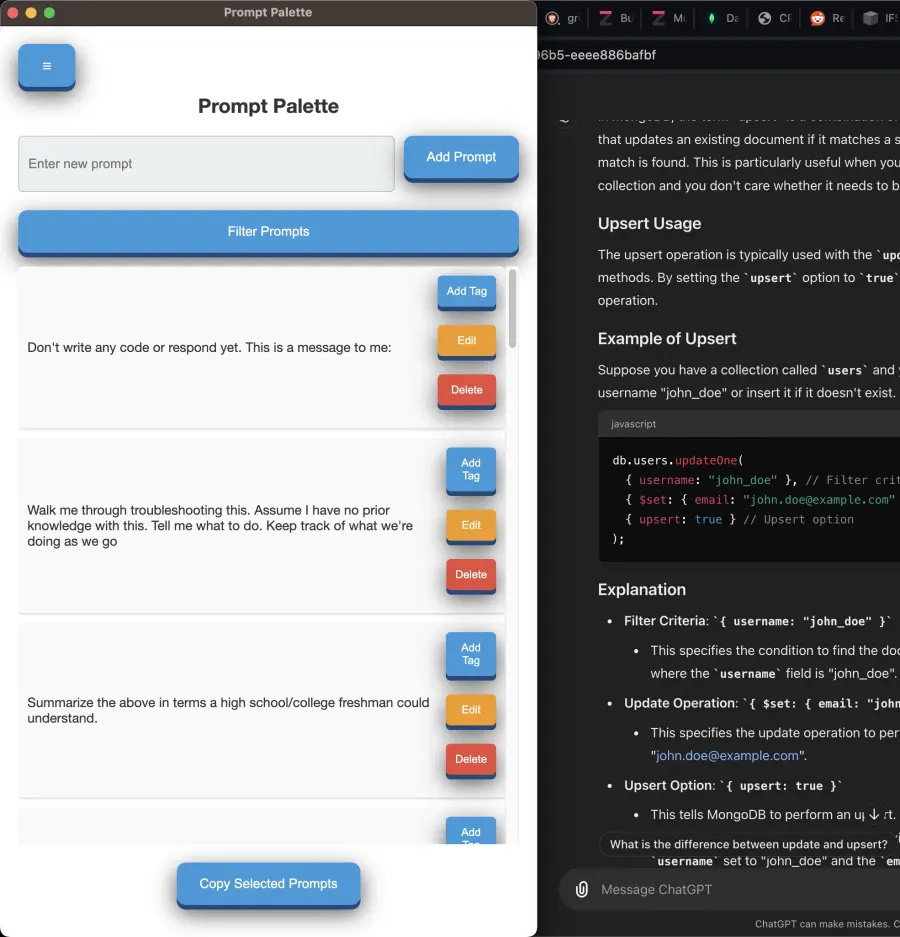
- Used for workflow tools that live inside the browser, including capturing, organizing, and reusing prompts without leaving the page.
- HTML & CSS
- Used for hand-built interfaces, responsive layouts, landing pages, portfolio work, and small business sites.
- Go
- Used for command-line and backend-leaning experiments, including image-to-ASCII conversion and Mattermost plugin work.
- Node.js, Express & APIs
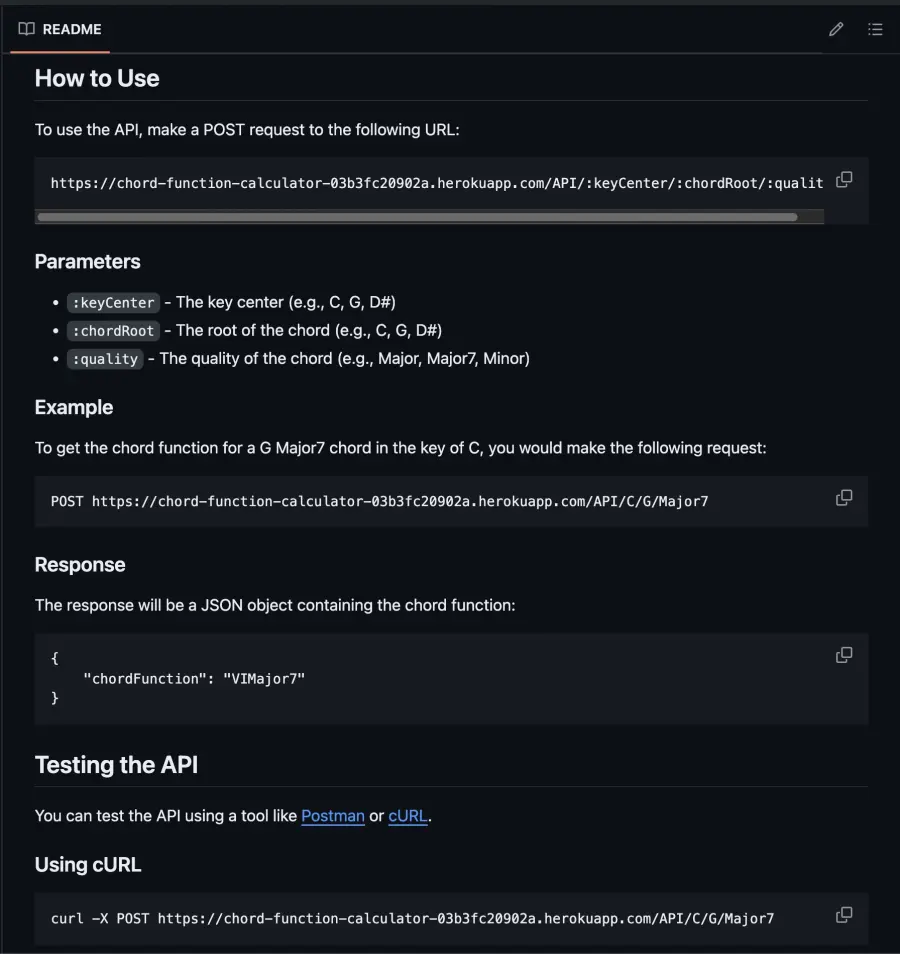
- Used for server basics, deployable endpoints, API examples, and chord-function tools that expose music data through code.
- Shell scripting
- Used for local utilities, setup scripts, and workflow helpers like transcription-related command-line scripts.
- React, Vue & Vite
- Used to turn product ideas into testable front-end prototypes quickly, especially when forms, state, and repeated UI patterns need to stay organized.
- Postgres
- Used when an app needs reliable records, relationships, and queries instead of temporary browser-only state.
- C, C++, Assembly & Scheme
- Used to build a stronger mental model for memory, performance, recursion, and how higher-level tools behave underneath the abstraction.
- Python 3
- Used for quick automation and file-processing scripts that make cleanup, setup, and repeatable local workflows less manual.
- WordPress
- Built and adjusted content-managed sites so non-developers can update pages, menus, and copy without needing a developer for every small change.